An adhan clock is a strange kind of purchase. It is not the most used device in your home, but it is the most heard — five times a day, every day, for years. Buy the wrong one and you get tinny audio, times that drift from your masjid, and a display that glows like a television at Fajr. Buy the right one and it quietly becomes part of the household. Here is what actually separates the two, based on the clocks we stock and the feedback of the families who use them.
First: Prayer Time Conventions and Calculation
The core job of an adhan clock is calculating prayer times correctly, and this is where cheap clocks fail quietly. Prayer times are not universal — they depend on calculation conventions (ISNA, Muslim World League, Umm al-Qura, Egyptian, and others), and masajid in the same city sometimes differ by a few minutes. A good clock lets you choose your convention, apply a manual minute adjustment, and auto-adjust for daylight saving. Our Digital Adhan Clock supports all major conventions and auto-adjusts for DST, which means you set it once and never think about it again until you travel.
The daylight saving test
Ask any adhan clock owner about the biannual hour change and you will hear a story. Clocks without automatic DST adjustment silently run an hour off, and the family discovers it at the wrong time. Auto-adjustment is not a luxury feature; it is the difference between a device you trust and a device you have to supervise.
Audio: The Feature You Will Judge Every Single Day
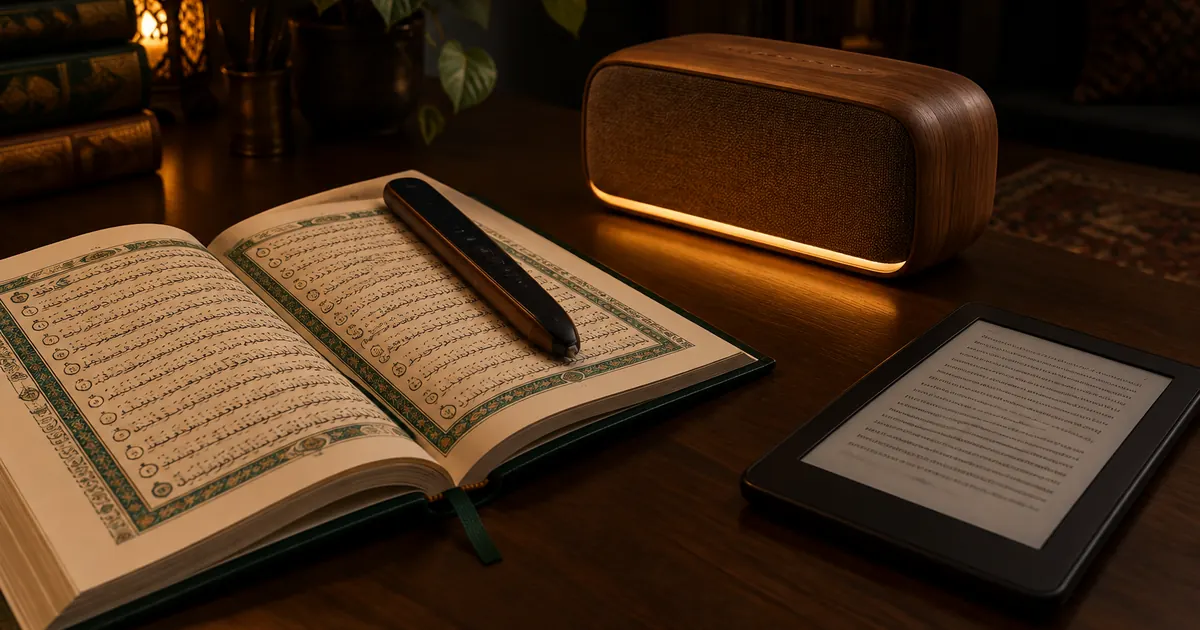
You will hear this device thousands of times. The speaker quality matters more than any other specification. Listen for a clear, dignified recitation without harshness at higher volume — Fajr adhan at bedroom volume is where cheap speakers buzz. Volume range matters too: loud enough for a living room at midday, gentle enough not to startle a sleeping baby at dawn. The Smart Quran Speaker doubles as a full Quran audio device, which is why it is our most-gifted piece after the clocks.
Display: Readable at Fajr, Dim at Night
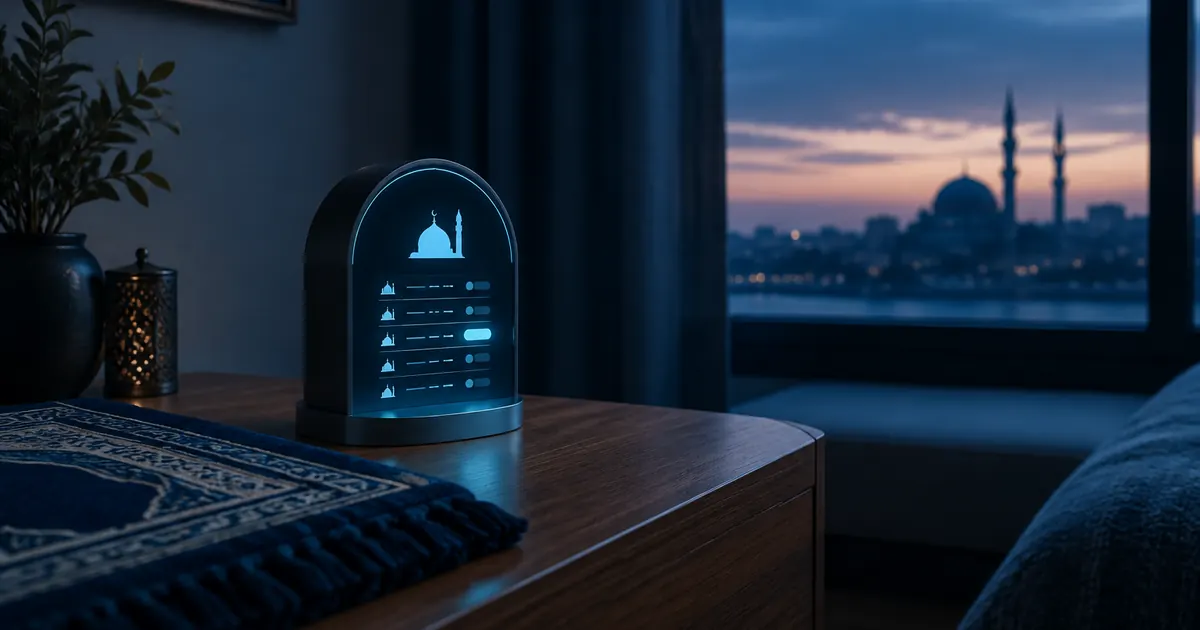
The display needs to pass two opposite tests: readable across the room in daylight, and dim enough not to light up a dark bedroom. Look for adjustable brightness with a true night mode, not just two fixed levels. Larger displays also help older family members, which is why our clocks and the Smart Islamic Calendar Display both prioritize legibility over gadgetry.
Power: What Happens When the Outlet Fails
Adhan clocks are plug-powered, and the good ones carry battery backup so times and settings survive an outage. Battery-only clocks drift and eventually die; plug-only clocks forget everything when the power blinks. Backup is a small feature on a spec sheet and a large one in real life, especially for the Fajr alarm function.
For travelers and students
If your prayer routine moves — dorm rooms, shifts, travel — consider a companion device rather than carrying your clock. The Qibla Finder Smartwatch keeps prayer times and direction on your wrist, and the Solar Power Bank keeps everything charged off-grid. The clock anchors the home; the watch anchors the day.
Placement: Where the Clock Lives
Two placement rules from customers. First, put the clock where its sound carries — a hallway or living room serves a whole home better than a bedside table, unless the clock doubles as your Fajr alarm. Second, keep it away from soft furnishings that muffle the speaker. A wall shelf at head height broadcasts better than a cushioned shelf corner.
Setup: How Long It Should Take
A well-designed clock sets up in under ten minutes: pick your city or enter coordinates, choose your convention, adjust minutes to match your masjid if you like, set the adhan sound and volume, done. If a clock's setup requires a manual the size of a novella, that is a design failure you will pay for again every time you change a setting.
The Quick Checklist
- All major calculation conventions plus manual minute adjustment? ✔
- Automatic daylight saving adjustment? ✔
- Clear speaker, wide volume range? ✔
- Brightness that dims properly for bedrooms? ✔
- Battery backup for settings and time? ✔
How We Test the Clocks We Stock
Every clock in the Prayer Time Tools collection passes the same gauntlet before it earns a product page. We run it against a verified timetable for thirty days — every prayer, every convention switch — and reject anything that drifts by more than a minute. We listen at Fajr volume in a real bedroom, not a showroom. We pull the power twice to confirm settings survive. Two clocks that looked identical to our survivors in photos failed that testing, and you will not find them here.
One Clock or Several?
Large homes often ask whether one clock serves everyone. Sound carries further than most people expect from a hallway placement, but bedrooms are a special case: Fajr needs to reach sleepers, and a closed door defeats any speaker. The common household pattern is one clock in the shared space plus the smartwatch as the personal layer — the clock anchors the home, the watch wakes the individual. Set both to the same convention and they will agree with each other and with your masjid.
Run that list and any clock you buy will earn its five daily appearances. Our Prayer Time Tools collection holds the clocks, displays, and companions we have already put through this checklist, with free US shipping, tax-free pricing, and 30-day returns behind every order.