Quran learning technology has quietly become excellent. Recitation quality that required expensive equipment a decade ago now fits in a pen, a speaker, or an e-reader the size of a paperback. But the three formats serve three very different learners, and buying the wrong one is the most common mistake we see. Here is the honest breakdown of who each tool fits, based on the devices we stock and the families who use them daily.
The Quran Pen: For Reading Along, Word by Word
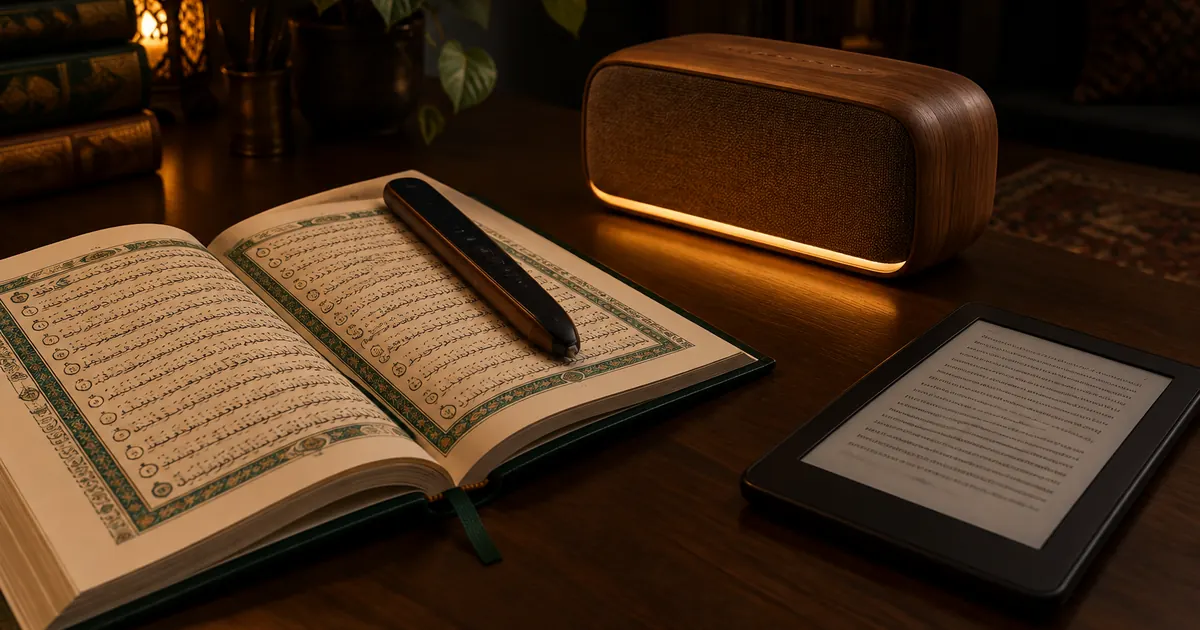
The Electronic Quran Pen Reader works with a physical mushaf: touch the pen to any ayah and hear it recited, word by word or ayah by ayah, with translation. It is the best tool for anyone learning to read, because it binds the sound to the exact letters on the page. Kids learning tajweed, reverts building reading confidence, and adults refreshing memorization all benefit from that tight sound-to-text loop.
Who the pen is not for
The pen requires the special printed mushaf and a table to spread it on. If your learning happens on a train or in bed, the pen's formality is a barrier. It is a study tool, not a listening tool.
The Smart Speaker: For Listening, Memorization, and the Home
The Smart Quran Speaker is the device that gets used by the whole household. HD audio worthy of the recitation, full surah playback, reciter selection, and a child-friendly slow mode. It is the pick for families who want Quran in the background of the home — morning recitation in the kitchen, surahs at bedtime — and for anyone memorizing who needs endless patient repetition of the same ayah.
The gifting math
The speaker is our most-gifted Quran device, and the reason is universality: it requires no reading, no setup beyond power, and benefits everyone in the house from grandparents to toddlers. Pair it with the LED Calligraphy Lamp and you have the most requested wedding gift combination we sell.
The E-Reader: For Study, Tafsir, and Deep Focus
The Islamic E-Book Reader is the serious student's tool: full Quran with translations and tafsir, a library of Islamic books, audio support, and a distraction-free screen that holds no social media. It suits adults doing structured study — tafsir circles, hifz revision with notes, comparative translation reading — and travelers who want a complete library in one device.
Why distraction-free matters
Using a phone app for Quran study means carrying the entire attention economy in the same device. The e-reader's whole value is that it does nothing else. For an hour of tafsir after Fajr, that difference is the product.
The Kids' Question
For children under about eight, the best learning device in our store is not in this category at all — it is the Interactive Prayer Mat for Kids, which teaches wudu and surahs through touch before reading begins. The pen joins the routine around age seven or eight, when letters on a page become interesting. The speaker, meanwhile, serves from birth.
Combining the Tools
These devices are complements, not competitors. The most common household we hear from uses the speaker for daily listening, the pen for structured reading practice twice a week, and the e-reader for a weekend tafsir session. The total is less than a tablet, and every device does its one job without notifications.
Choosing in One Sentence Each
- Pen: you want to learn to read the page itself, letter by letter.
- Speaker: you want the whole home to live with the recitation daily.
- E-reader: you want to study deeply, with a library and no distractions.
Arabic Reading Before the Devices
A fair question from parents: does technology replace the traditional path? Our customers' experience says it accelerates the qaida stage rather than replacing it. The pen binds sound to the page a teacher already taught; the speaker models recitation between lessons; the e-reader hosts the tafsir that deepens understanding later. What none of them replace is the teacher's correction of your recitation — the devices make practice between lessons constant, which is where most of the progress actually happens.
Screen Time Concerns, Addressed
Parents worried about adding screens to bedtime can be specific about what each device is. The speaker has no screen at all. The pen's display is a single digit count. The e-reader's matte screen shows text, not video, and holds no apps or notifications. The interactive kids' mat is fabric. If your household is managing screen time, this category is one of the few where the technology is the antidote rather than the problem.
Whichever fits your household, our Quran Learning collection holds the tested versions of all three, with free US shipping, tax-free pricing, and 30-day returns to make the choice reversible.